

Skip to content
Book
A color Japanese phoenix, blossoms, tiger and dragon cover a back.A color Japanese woman in a patterned kimono among pink blossoms covers an upper arm.A colorful Japanese teal Hannya mask with cherry blossoms covers a forearm.A Japanese koi tattoo with blue scales, red accents and grey waves covers an upper arm.A colorful Japanese tattoo with a foo dog, dragons, Buddha and blossoms covers the chest, torso and arm.Japanese tattoos of a purple octopus in blue waves and a green dragon in orange flames cover the chest and upper arms.

From the blog

  • Watercolor phoenix in red, gold and purple with a long trailing tail beside a black dandelion and drifting seeds on the ribs.
  • A traditional chest tattoo combines a skull, birds, red roses, pocket watch and lettering.
  • Traditional color sunset, palm tree and compass tattoo covers the upper arm.
  • A black and grey illustrative skull and antlers sit beneath a triangular eye on the neck and upper back.
  • Japanese Tattoos

    Koi and oni mask tattoo meanings: colors

    Japanese tattoo designs have a rich history and deep cultural significance. Dating back thousands of years, these designs have evolved and become an integr
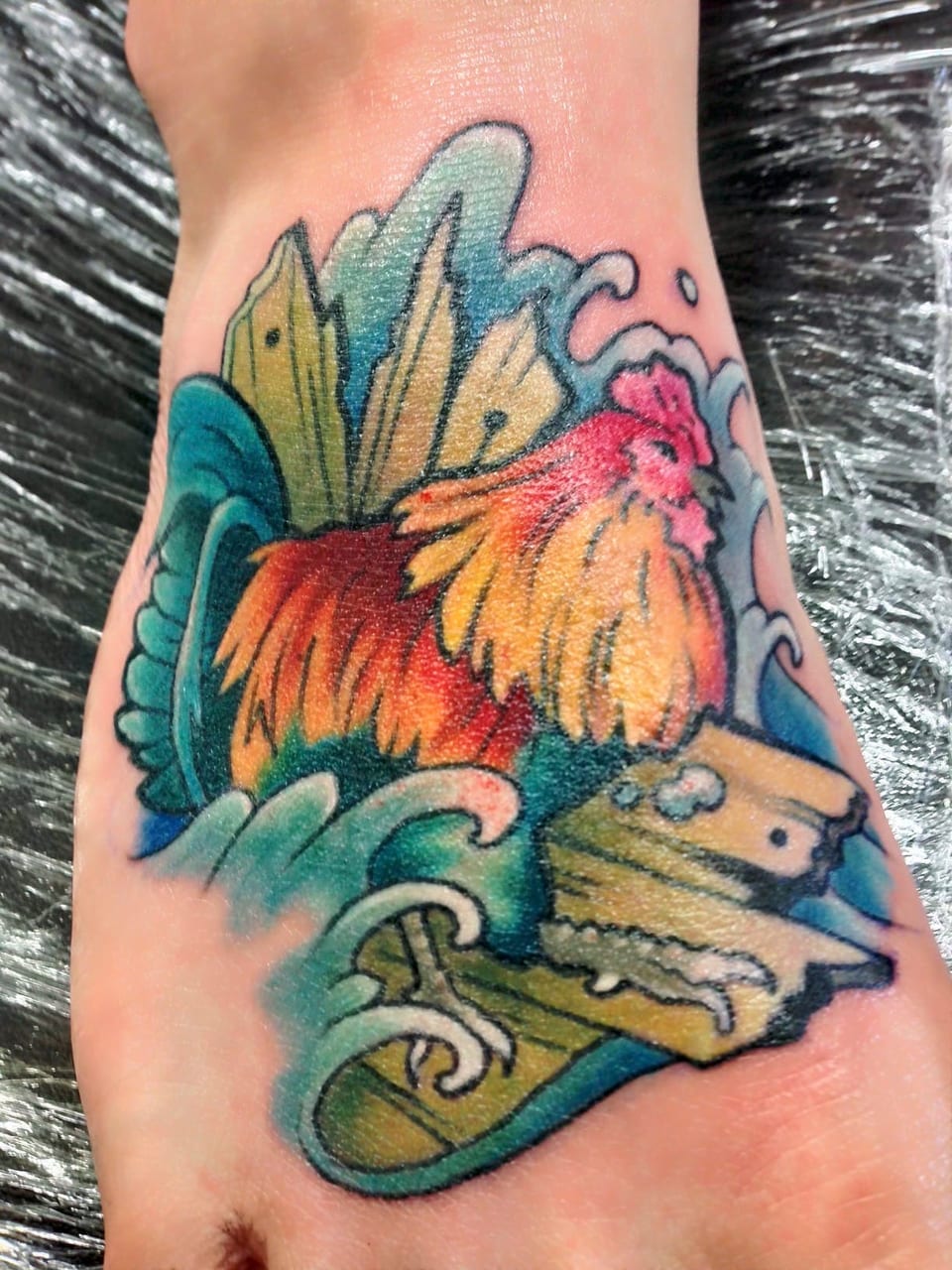
    A color illustrative rooster among blue waves and broken wooden planks covers the top of a foot.
  • Japanese Tattoos

    Foo dog tattoo meanings alongside dragons

    Japanese tattooing has a rich and vibrant history that dates back thousands of years. The art of tattooing, known as irezumi, has been an integral part of
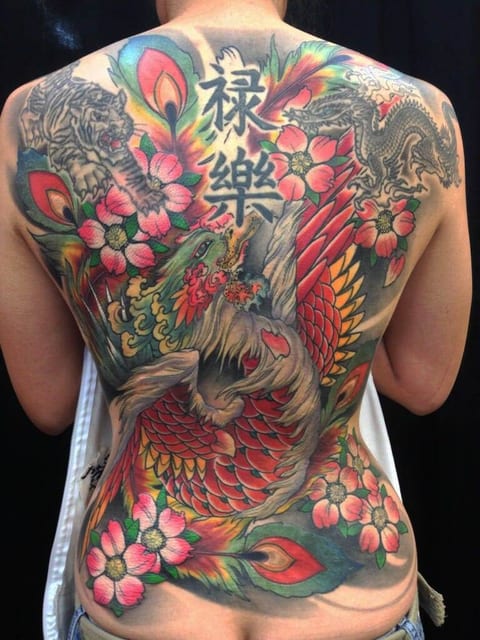
    A colorful Japanese phoenix, tiger, dragon and blossoms cover a person's back.
  • Japanese Tattoos

    Japanese tattoo symbolism: dragons, koi

    Traditional Japanese tattoos, also known as irezumi, have a rich history and cultural significance in Japan. These tattoos are characterized by their vibra
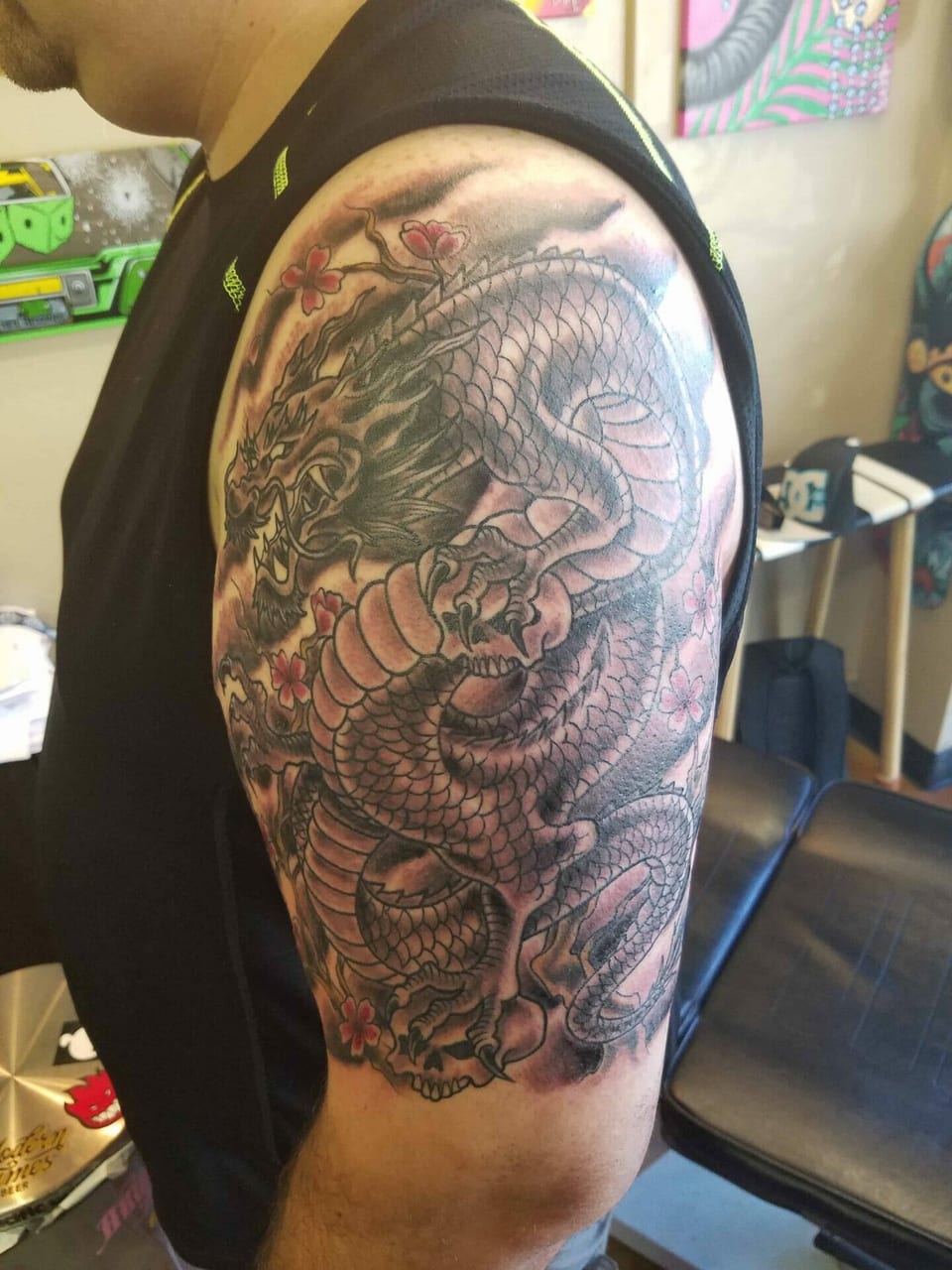
    A Japanese dragon curls among pink blossoms on an upper arm.
  • A color illustrative green eye sits in a pyramid beneath a spiral galaxy and lettered banners on the upper arm.
  • Close view of a ram skull, yellow roses and a neo-traditional woman with red tears and blue hair on a forearm.
  • A color neo traditional woman wears a horned skull headdress on a forearm.
  • A traditional purple snake coils around a green clover over a red glow on a calf.
  • Japanese Tattoos

    Heian-era tattoos: Japan's changing tattoo

    Japanese tattoos have a rich history and deep cultural significance in Japan. They are not just a form of body art, but also a reflection of the country’s
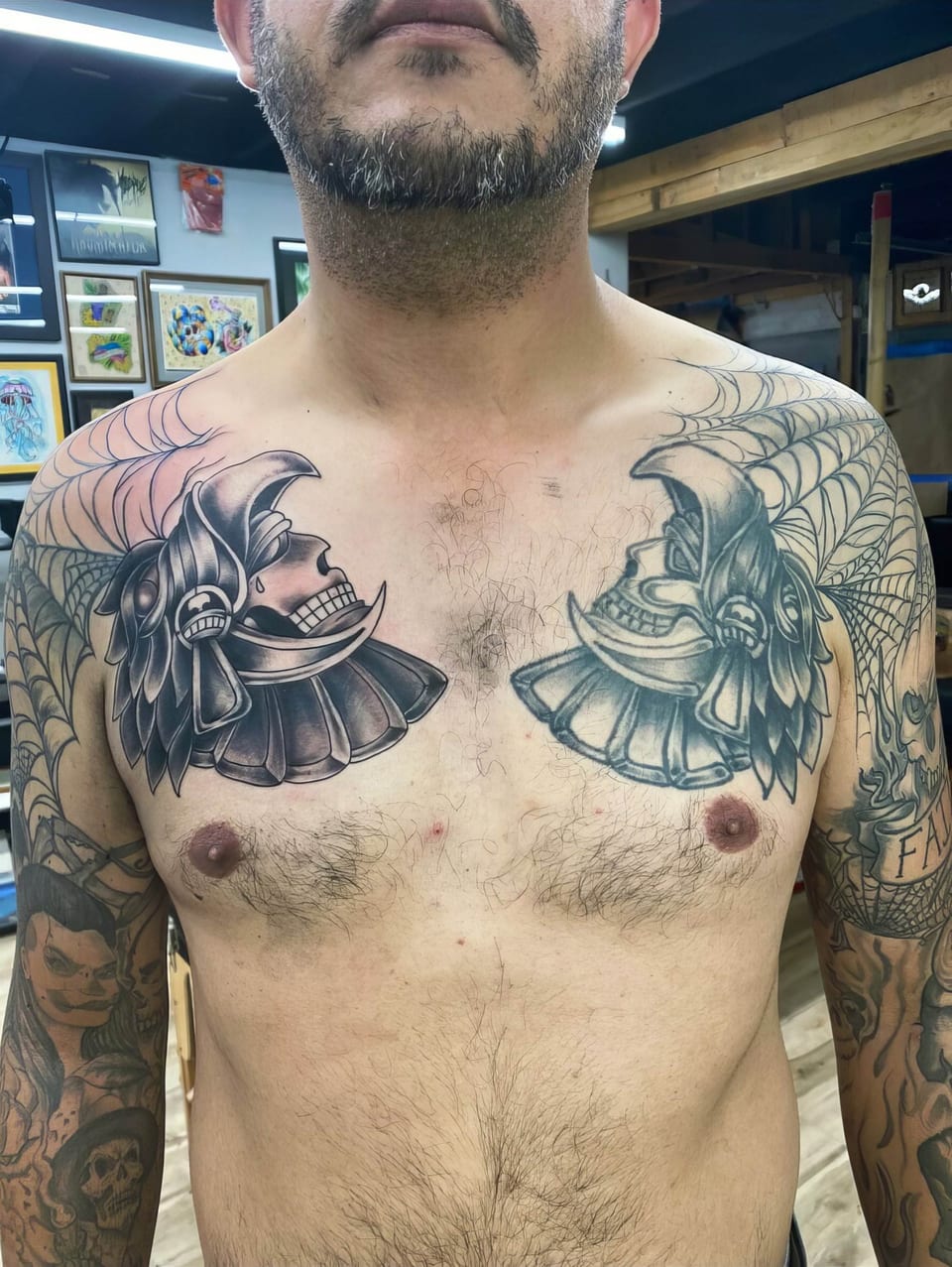
    Black and grey Japanese samurai helmets cover a chest beneath shoulder spiderwebs.
  • Japanese Tattoos

    Japanese snake tattoo meanings: folklore

    Snake tattoos have a rich history and cultural significance in Japanese culture. Understanding the historical and cultural context of these tattoos is esse
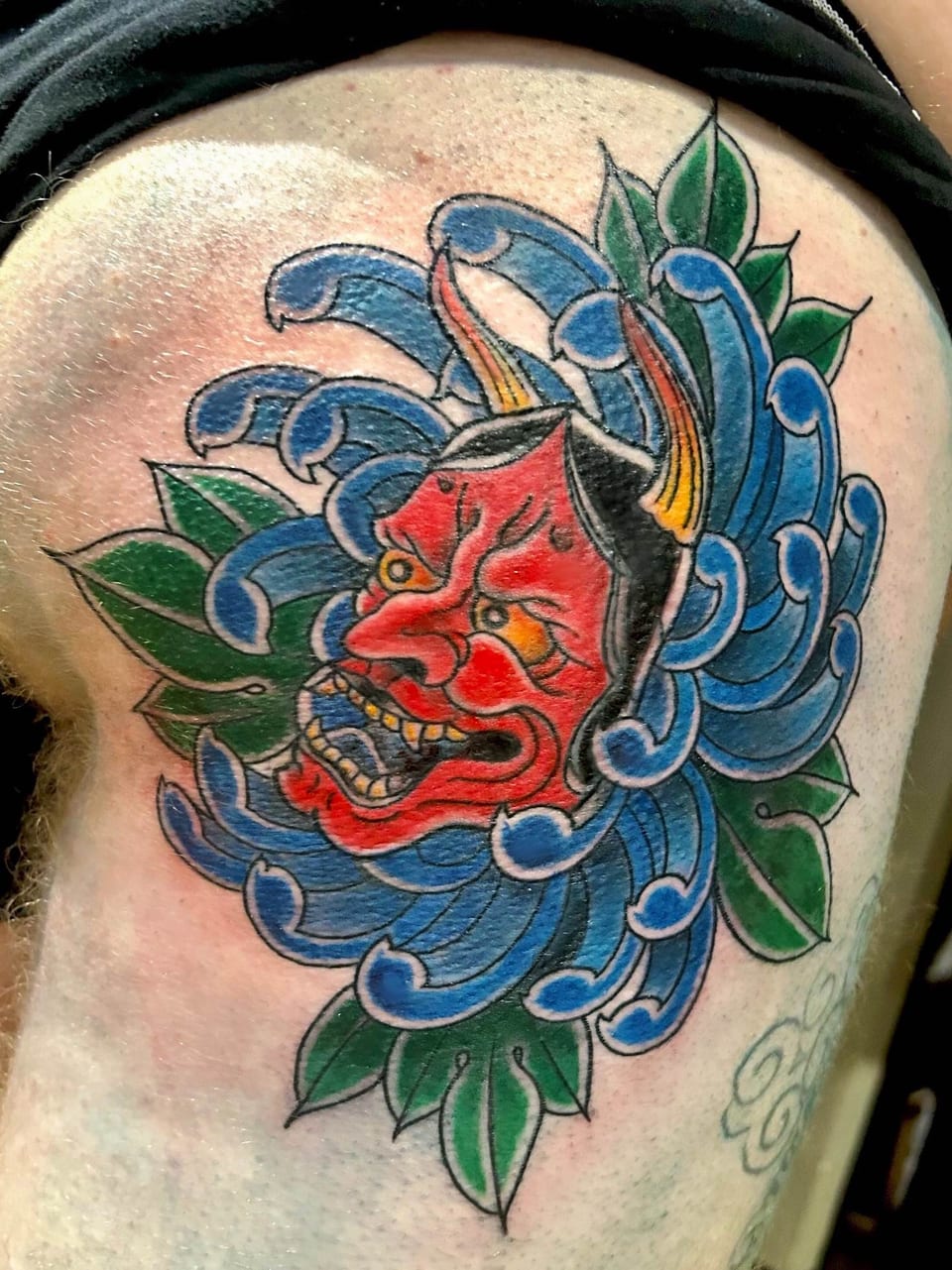
    A Japanese red demon mask sits within a blue chrysanthemum on the upper arm.
  • Japanese Tattoos

    Japanese flower tattoo meanings: symbolism

    Japanese flower tattoos, also known as hanakotoba, have a rich history and hold great significance in Japanese art. These tattoos are not just beautiful de
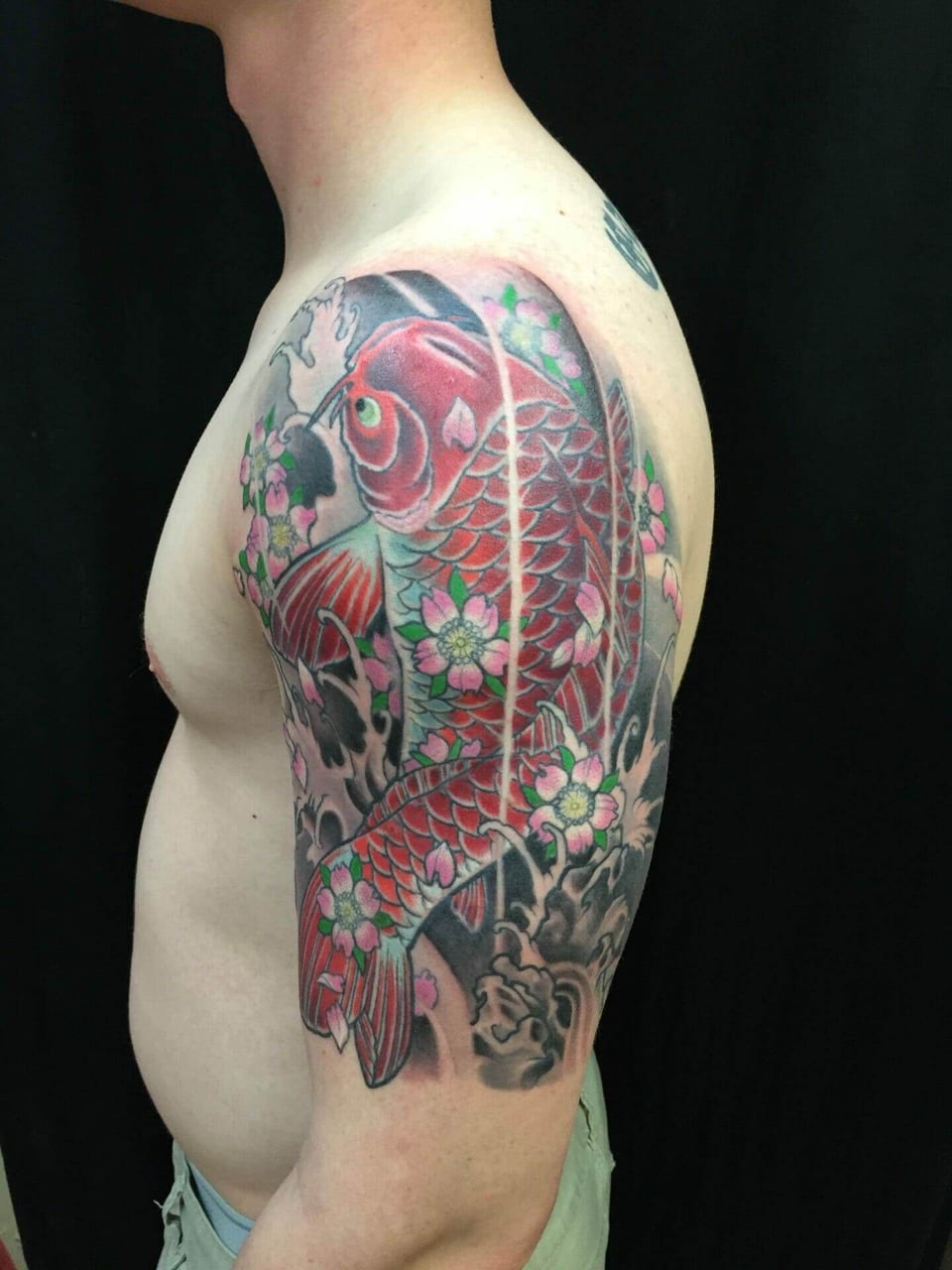
    A Japanese red koi tattoo winds through pink cherry blossoms and black waves on an upper arm.
  • Black and grey illustrative crossed nails bound with cord sit above the elbow with red torn-skin accents.
  • A black and grey realism woman with painted tear lines holds a smiling mask marked Loyalty on a forearm, against wood.
  • A black and grey eagle patch tattoo with an Airborne banner sits above the elbow.
  • A watercolor feather in blue, red and green runs along a forearm amid ink splashes.
  • Japanese Tattoos

    Japanese tattoos: cultural context

    Japanese tattoos have a rich history and cultural significance that dates back thousands of years. From ancient times to the modern era, Japanese tattoos h
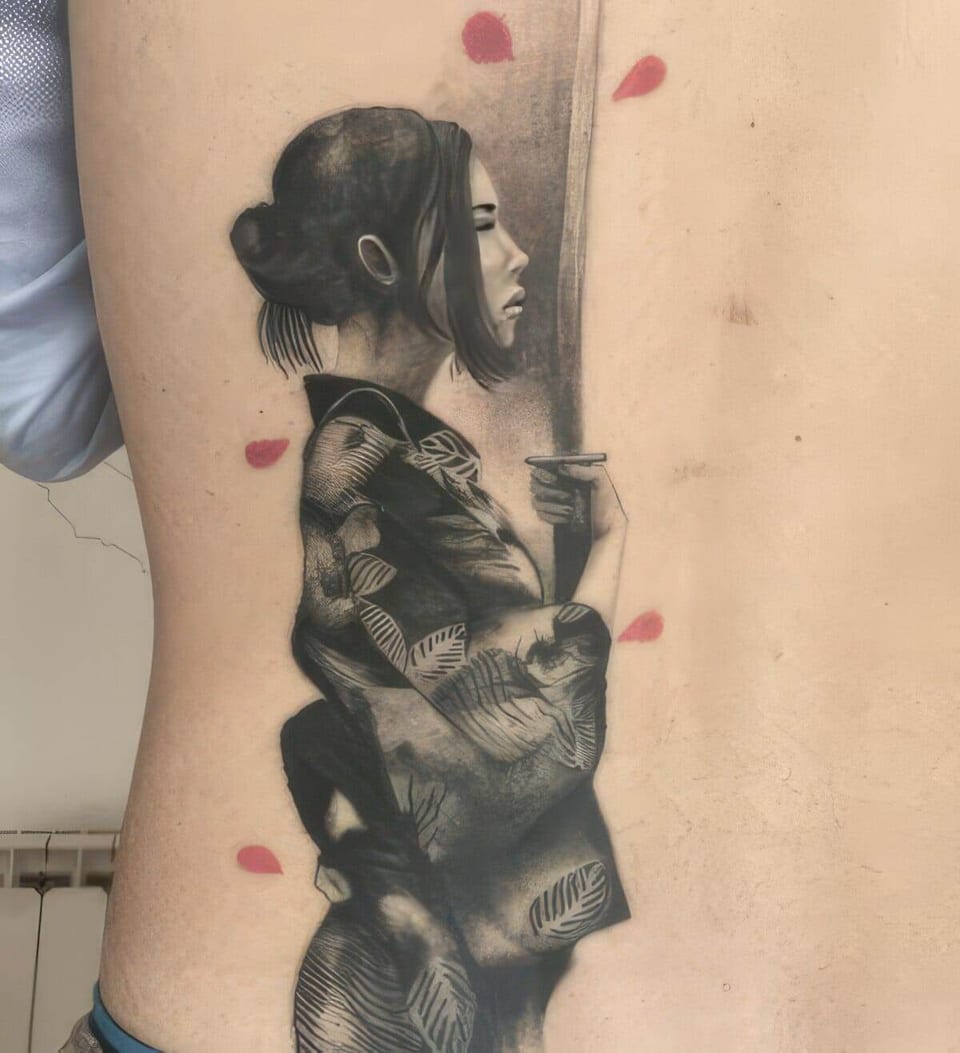
    A black and grey realistic woman in a patterned kimono with pink petals extends down the back.
  • Japanese Tattoos

    Japanese wave tattoo meanings: water

    Japanese tattooing, also known as irezumi, has a rich history that dates back thousands of years. It is believed to have originated in the Jomon period…
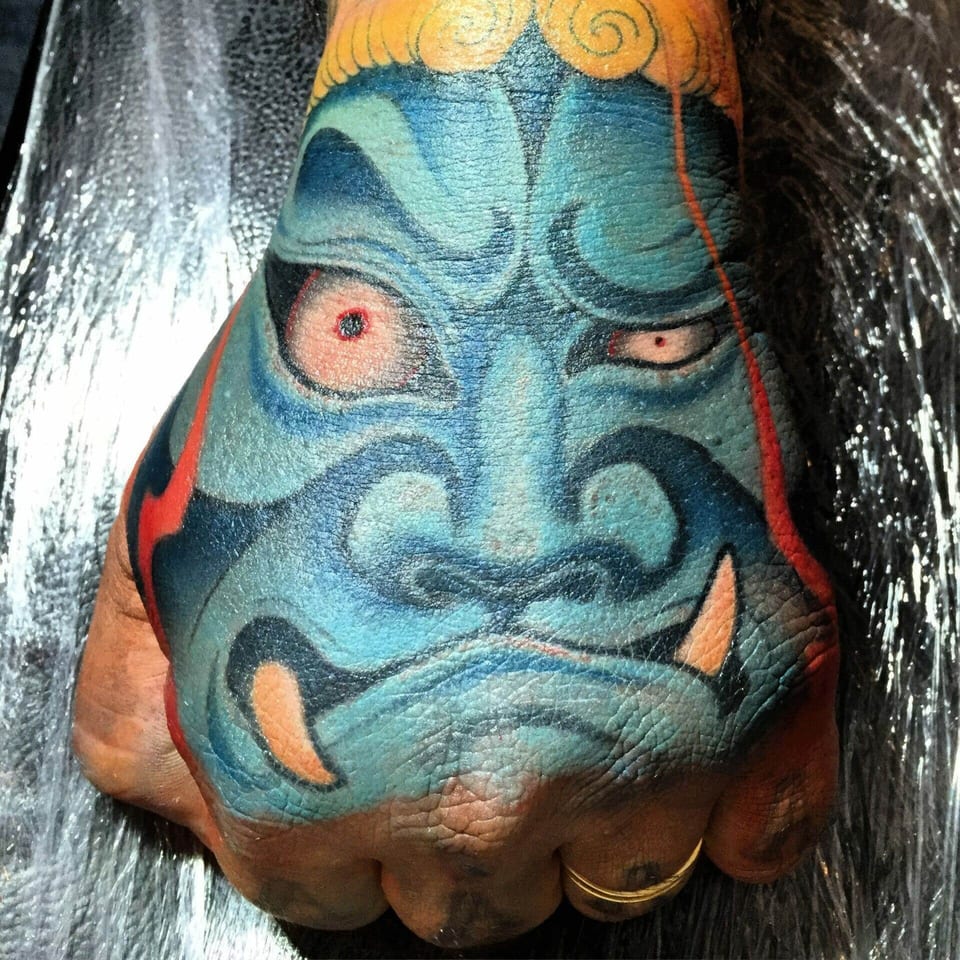
    A Japanese blue oni mask tattoo bares orange fangs across the back of a hand.
  • Japanese Tattoos

    Irezumi history: tools, iconography

    Japanese style tattoos, also known as irezumi, have a rich history and cultural significance that goes beyond mere body art. These tattoos are characterize
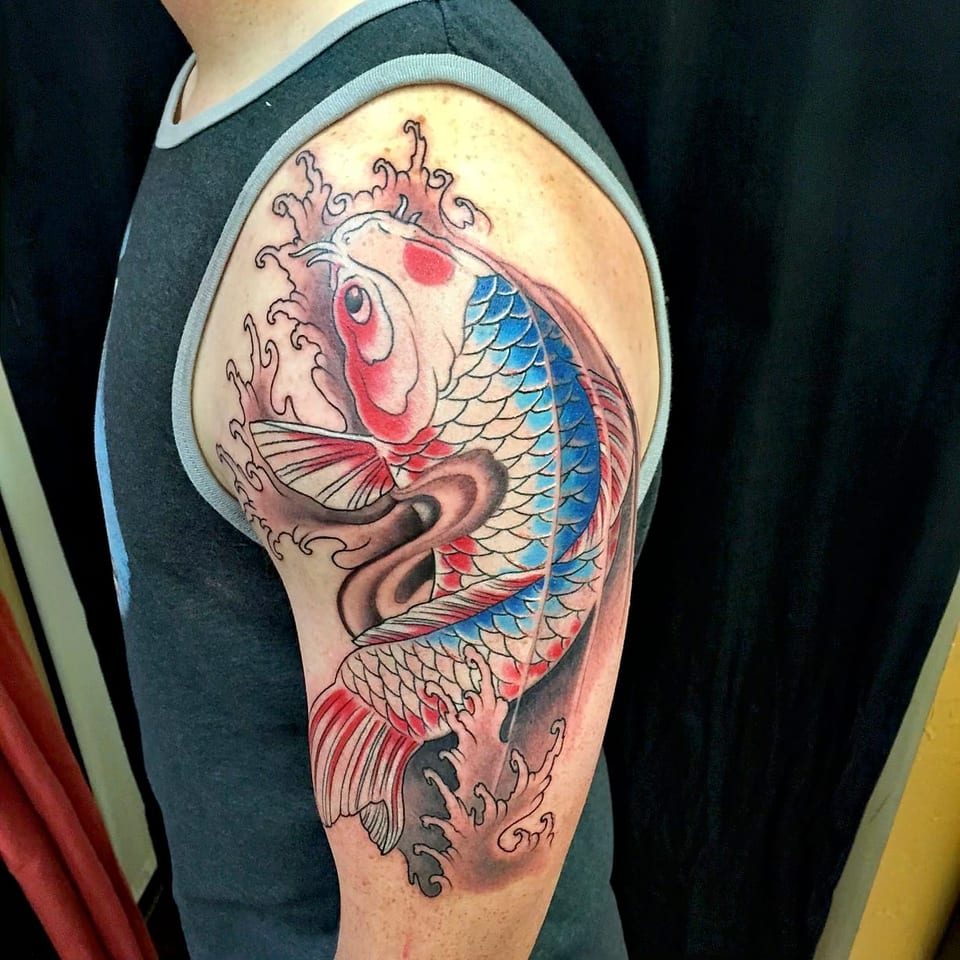
    A color Japanese blue, white and red koi swimming through waves covers an upper arm.
  • A color biomechanical spring and metal rods beneath a torn-skin effect cover a calf.
  • Polynesian pattern wrapping a man's lower leg, tattooed by Seth Reynolds
  • A traditional sailor portrait with an eagle on the illustrated chest covers the forearm.
  • A black and grey fighter jet with a star insignia stretches across the inner upper arm.
  • Japanese Tattoos

    Japanese tattoos abroad: influence

    Japanese tattoos have a rich history and cultural significance that dates back centuries. These intricate and vibrant designs have become increasingly popu
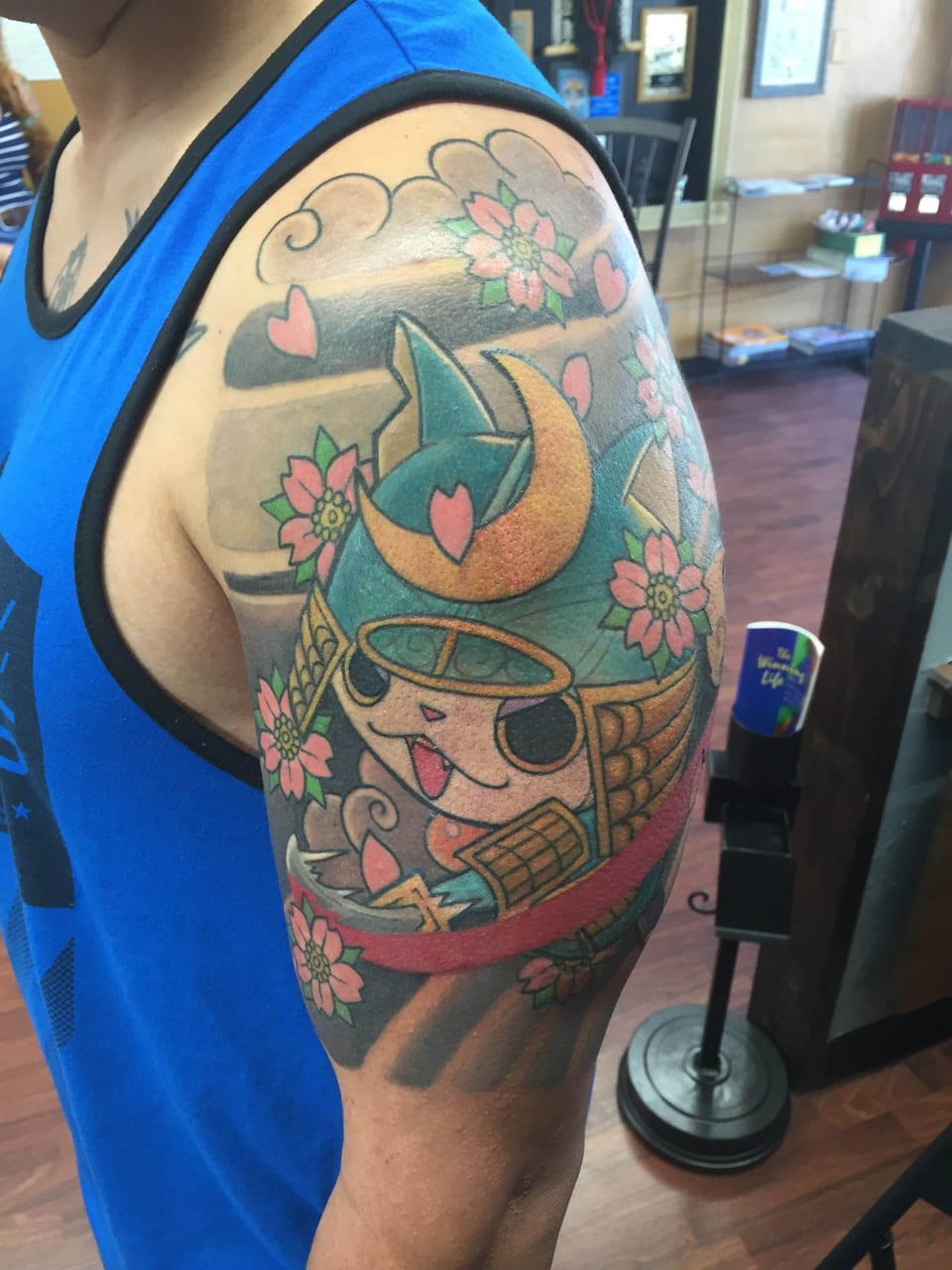
    A colorful Japanese-style samurai cat with a teal helmet, hearts and blossoms covers an upper arm.
  • Custom Tattoo Design

    Tattoo traditions around the world: styles

    Understanding the Cultural and Historical Significance of Tattoo Art Tattoo art has been an integral part of various…
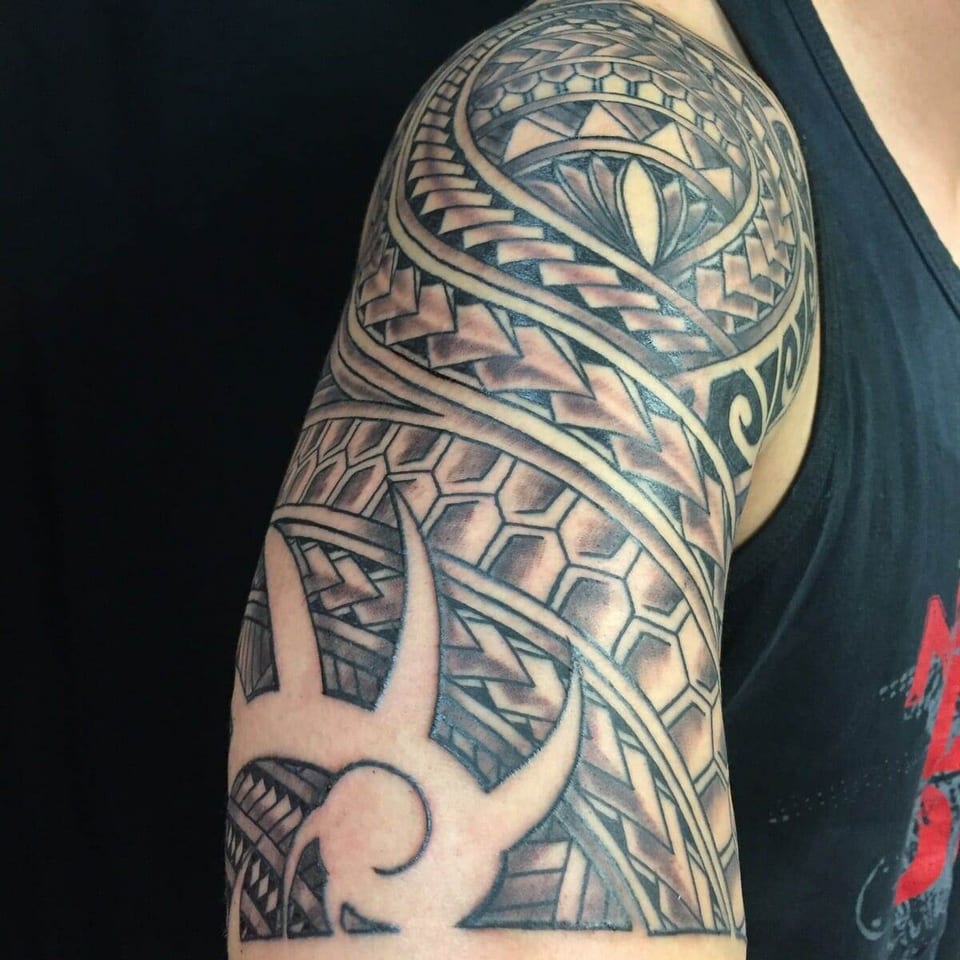
    A black Polynesian upper-arm tattoo combines a sun motif, geometric bands and broad uninked curves.
  • Japanese Tattoos

    Blue koi fish tattoos: modern palettes

    When it comes to tattoos that are rich in symbolism and cultural significance, Koi fish tattoos are a…
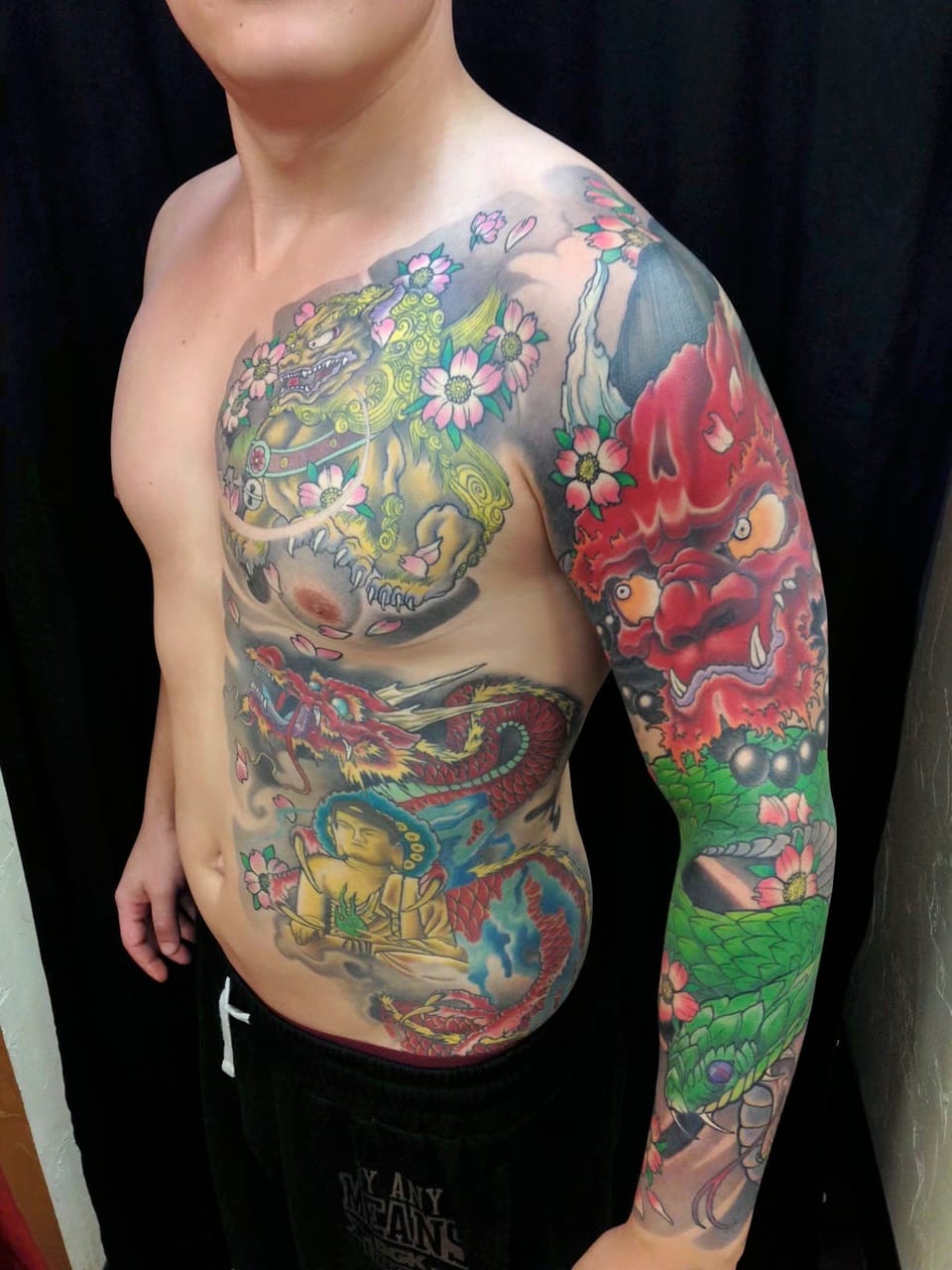
    Color Japanese dragon, guardian lion, mask and blossoms span an arm and the side of a torso.
A black and grey Aztec calendar face fills an arm tattoo.Black Polynesian-style spiral and wave pattern tattooed on an upper arm, tattooed by Seth Reynolds

Want us to call you?

Your name, mobile and email. We call you back, usually the same day.

We call or text this number.

Prefer to write the details? Use the full form.